
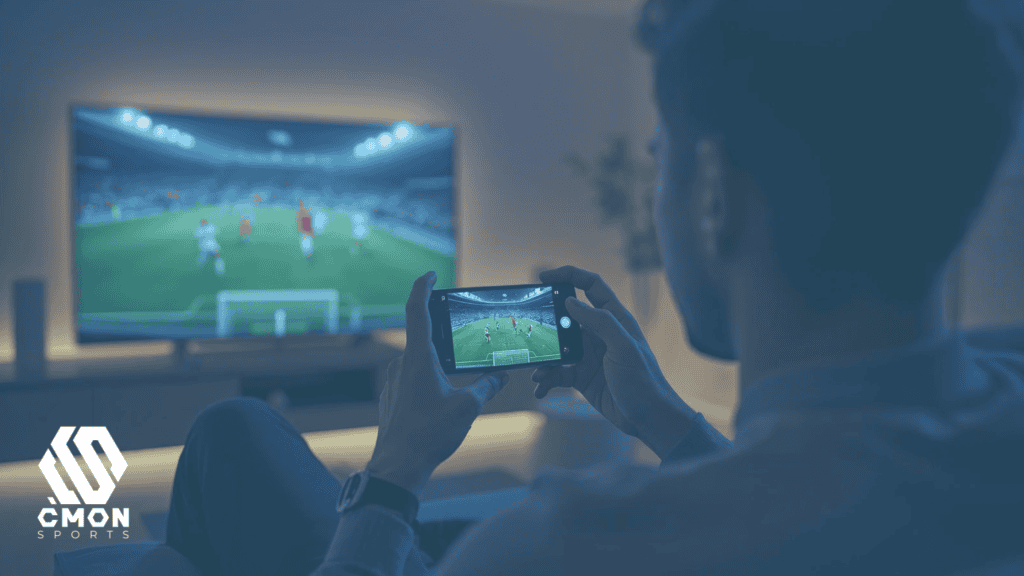
The Rise of the Second Screen in Sports
Walk into any sports stadium today and you will see a familiar scene: thousands of fans with their smartphones in hand, scrolling through stats, sharing moments on social media, and checking fantasy scores, all while watching the live action unfold in front of them. The second screen is no longer a distraction from the gameday experience. It has become an integral part of it.
For sports organizations, this behavioral shift represents one of the most significant engagement opportunities of the decade. Fans who actively use mobile apps during events are not disengaged. They are hyper-engaged, interacting with your brand through multiple channels simultaneously. The organizations that design compelling second-screen experiences are capturing attention, generating data, and creating revenue streams that did not exist five years ago.
This article examines how leading sports organizations are leveraging mobile apps and second-screen technology to transform the gameday experience, deepen fan relationships, and unlock new commercial value.
What Makes an Effective Second-Screen Experience
Complementary, Not Competing
The most successful second-screen experiences enhance the live event rather than competing with it. A mobile app that pulls a fan attention away from the action on the field is poorly designed. An app that adds layers of context, interactivity, and personalization to what the fan is already watching creates genuine value.
Effective second-screen features fall into several categories: real-time statistics and data visualizations that deepen understanding of the match, interactive elements like polls, predictions, and trivia that create shared experiences among the crowd, personalized content delivery based on fan preferences and location within the venue, and frictionless commerce for food, beverage, merchandise, and experience upgrades.
Real-Time Data Integration
The backbone of any compelling second-screen experience is real-time data. Fans expect instant access to statistics, replays, and analysis that complement what they are seeing live. This requires robust data infrastructure that can process and deliver information with minimal latency, often within seconds of an on-field event occurring.
Organizations that have invested in strong data management foundations are best positioned to deliver these real-time experiences. The technical requirements include live data feeds from tracking systems, low-latency content delivery networks, and app architectures designed for high concurrent usage during peak moments like goals, touchdowns, or controversial decisions.
Key Features Driving Mobile Engagement on Gameday
Live Stats and Enhanced Replays
Providing fans with real-time statistics goes beyond basic score updates. Advanced second-screen implementations deliver player tracking data, heat maps, possession statistics, and expected goals or win probability models that update with every play. These features appeal to the growing segment of data-literate sports fans who want to understand the game at a deeper level.
Enhanced replay functionality takes this further. While stadium screens show standard replays, a second-screen app can offer multiple camera angles, slow-motion options, and overlaid analytics. Some organizations have experimented with allowing fans to control their own replay experience, choosing which moments to review and from which perspective.
Interactive Predictions and Gamification
Prediction games and gamification elements are among the highest-engagement second-screen features. Asking fans to predict the next goal scorer, the outcome of the next play, or the final score creates a personal stake in the action that amplifies emotional engagement. When these predictions are tied to rewards, whether digital badges, loyalty points, or tangible prizes, engagement rates increase significantly.
Leaderboards that track prediction accuracy throughout a match or season create social dynamics within the fan community, encouraging return usage and friendly competition. These gamification mechanics align closely with broader fan engagement personalization strategies, providing data signals that help organizations understand individual fan preferences and behaviors.
In-Seat Ordering and Commerce
Mobile ordering has transformed the concession experience at sports venues. Fans can browse menus, place orders, and pay without leaving their seats, reducing queue times and increasing per-cap spending. The data shows that fans who use mobile ordering spend 20 to 30 percent more per visit than those who purchase at traditional concession stands, driven by the convenience factor and the ability to browse full menus rather than making quick decisions under queue pressure.
Beyond food and beverage, second-screen commerce extends to merchandise, seat upgrades, parking, and experience add-ons. A fan receiving a push notification offering a premium seat upgrade at a reduced price during halftime is experiencing personalized, contextual commerce that benefits both the fan and the organization. These in-app transactions also generate valuable data that feeds back into the fan profile, enabling increasingly relevant future offers.
Social Integration and Shared Moments
Sports are inherently social experiences, and second-screen apps can amplify this social dimension. Features that enable fans to share moments, reactions, and photos directly from the app, complete with event-specific filters, frames, and hashtags, create organic social media content that extends the event reach far beyond the venue.
Some organizations have introduced crowd-sourced content walls that display fan photos and messages on stadium screens, creating a feedback loop between the second screen and the main screen. These features generate significant engagement while providing the organization with user-generated content assets and organic social media amplification.
Data Collection and Fan Intelligence
Behavioral Data from Second-Screen Usage
Every interaction on a second-screen app generates behavioral data that enriches fan profiles. Which features does a fan use most frequently? At what moments during a match are they most active? Do they engage more with statistics or social features? Do they respond to commercial offers during timeouts or at halftime?
This behavioral data is extraordinarily valuable for building comprehensive fan understanding. When combined with ticketing data, CRM information, and other first-party data sources, second-screen usage data creates a rich, multi-dimensional view of each fan that powers personalization across all channels.
Location Intelligence
Second-screen apps with location services enabled provide venue-level intelligence that was previously impossible to obtain. Understanding how fans move through a venue, where they spend time before and after matches, and how traffic patterns vary by event type enables optimization of everything from concession placement to sponsor activation zones.
Bluetooth beacons and similar technologies can pinpoint fan locations with sufficient accuracy to deliver hyper-contextual content: a welcome message upon entering the venue, a food offer when near a concession stand, or a merchandise promotion when passing the team store. This location-aware personalization creates relevance that generic communications cannot match.
Monetization Strategies for Second-Screen Platforms
Sponsored Content and Experiences
Second-screen apps create premium digital inventory for sponsors that is contextually integrated into the fan experience. Sponsored prediction games, branded stat overlays, and presented replay features offer sponsors visibility that feels native rather than intrusive. Because these sponsorships are delivered within a high-engagement environment and can be targeted based on fan data, they command premium rates compared to traditional digital advertising.
The ability to provide sponsors with detailed engagement metrics, not just impressions but interactions, completion rates, and downstream behavior, represents a significant advancement in sponsorship value demonstration. Organizations that can prove the engagement impact of their second-screen sponsorship inventory are building stronger, more data-driven commercial partnerships.
Premium Content Tiers
While basic second-screen functionality should be free to maximize adoption, premium content tiers can generate direct revenue from the most engaged fans. Advanced analytics packages, exclusive camera angles, ad-free experiences, and premium prediction leagues with enhanced rewards are features that a segment of fans will pay for, particularly when bundled with season ticket packages or loyalty program benefits.
Technical Considerations and Implementation
Infrastructure Requirements
Delivering a seamless second-screen experience in a venue with tens of thousands of simultaneous users requires robust technical infrastructure. High-density WiFi networks capable of supporting massive concurrent connections are essential. The venue cellular infrastructure must be adequate, and the app architecture must be optimized for performance under load.
Content delivery networks, edge computing solutions, and efficient API design ensure that data-heavy features like live statistics and video replays perform reliably even when 30,000 fans simultaneously refresh after a critical play. Organizations that underinvest in infrastructure will deliver frustrating experiences that drive fans away from the app rather than toward it.
User Experience Design
Second-screen apps must balance feature richness with usability. Fans are dividing their attention between the live event and their device, so the app interface must be immediately intuitive. Key actions should require minimal taps, content should load instantly, and navigation should be simple enough to use in the excitement and distraction of a live event.
The best second-screen experiences are designed around moments in the match: pre-match builds anticipation and provides useful information, live action provides real-time enhancement, breaks enable commerce and social interaction, and post-match facilitates reflection and sharing. This temporal design framework ensures that the app is always offering something relevant to what the fan is experiencing in that moment.
Measuring Second-Screen Success
Tracking the right metrics is essential for optimizing your second-screen strategy. Beyond basic adoption metrics like downloads and active users, focus on engagement depth: session duration during events, features used per session, commercial conversion rates, and the correlation between app usage and overall fan value metrics like retention and lifetime spending.
The most important KPIs for second-screen engagement connect app behavior to business outcomes. Does higher app engagement correlate with higher renewal rates? Do fans who use mobile ordering attend more matches? Do prediction game participants show higher merchandise spending? These are the questions that justify continued investment in second-screen technology and guide feature development priorities.
The Future of Second-Screen in Sports
The evolution of second-screen technology is accelerating. Augmented reality overlays that add digital information to the live view through a phone camera are moving from experimental to practical. Wearable devices will extend second-screen experiences beyond the smartphone. Voice interaction will enable hands-free access to stats and ordering. And as 5G networks mature, the bandwidth constraints that currently limit video-heavy second-screen features will largely disappear.
For sports organizations, the strategic imperative is clear: the second screen is not an optional enhancement but a core component of the modern gameday experience. Organizations that invest in compelling, data-rich, and commercially intelligent second-screen platforms will deepen fan engagement, generate new revenue streams, and build the data foundation for personalized fan relationships that extend far beyond matchday. The fans are already holding the screen in their hands. The opportunity is yours to fill it with something worth their attention.
FAQ
Second-screen experiences are digital interactions fans engage with on mobile devices while watching live sports, including real-time statistics, interactive polls, augmented reality overlays, social media integration, fantasy sports updates, and in-venue features like mobile ordering and seat upgrades that enhance the overall gameday experience.
Mobile apps improve engagement by providing personalized content and notifications, enabling cashless in-venue purchases, offering interactive features like live polls and predictions, facilitating wayfinding and seat upgrades, delivering exclusive behind-the-scenes content, and creating a direct communication channel between the team and fans.
Essential features include mobile ticketing and digital wallet integration, live game stats and video highlights, in-venue services like food ordering and parking, loyalty program integration, push notifications for personalized offers, social features for fan community building, and AR experiences that bridge physical and digital engagement.


